Celina Land Clearing
Celina, TX · Site Prep Specialists
(972) 640-1597
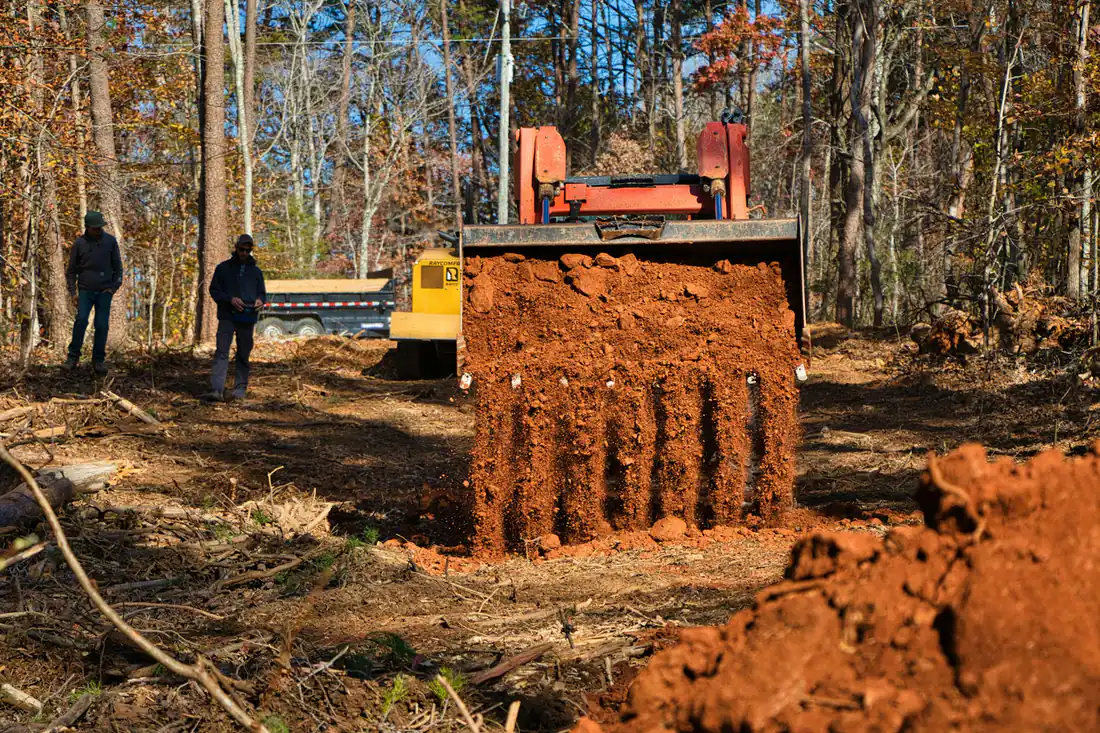
Loader bucket of red soil on a wooded lot being cleared, two workers behind
Home/Brush Clearing Celina TX

Brush Clearing in Celina, TX

Cedar, mesquite, and invasive brush cleared from ranch land, acreage, and developing lots across Celina and Collin County, from fence line to fence line.

Brush Clearing for Celina TX and Collin County Landowners

Brush clearing in Celina is mostly cedar and native brush on transitional ag land. Properties north of US-380 tend to have the densest brush, particularly along Honey Creek and the drainage corridors that cross rural acreage in the area. Land that carried an agricultural exemption for decades and was not actively managed often develops cedar thickets along fence lines and creek edges that make the property difficult to access or develop. Left unmanaged for a few years, usable pasture can become impenetrable brush.

Brush clearing covers eastern red cedar, mesquite, juniper, native scrub, and mixed undergrowth. Depending on the density and the intended use of the land, the work combines skid steer attachments and hand clearing to get the property clean from fence line to fence line. The goal is always to leave the land in a condition where you can take the next step, whether that's building, grazing, or simply having usable acreage again.

Cedar and Mesquite in Collin County: What You're Dealing With
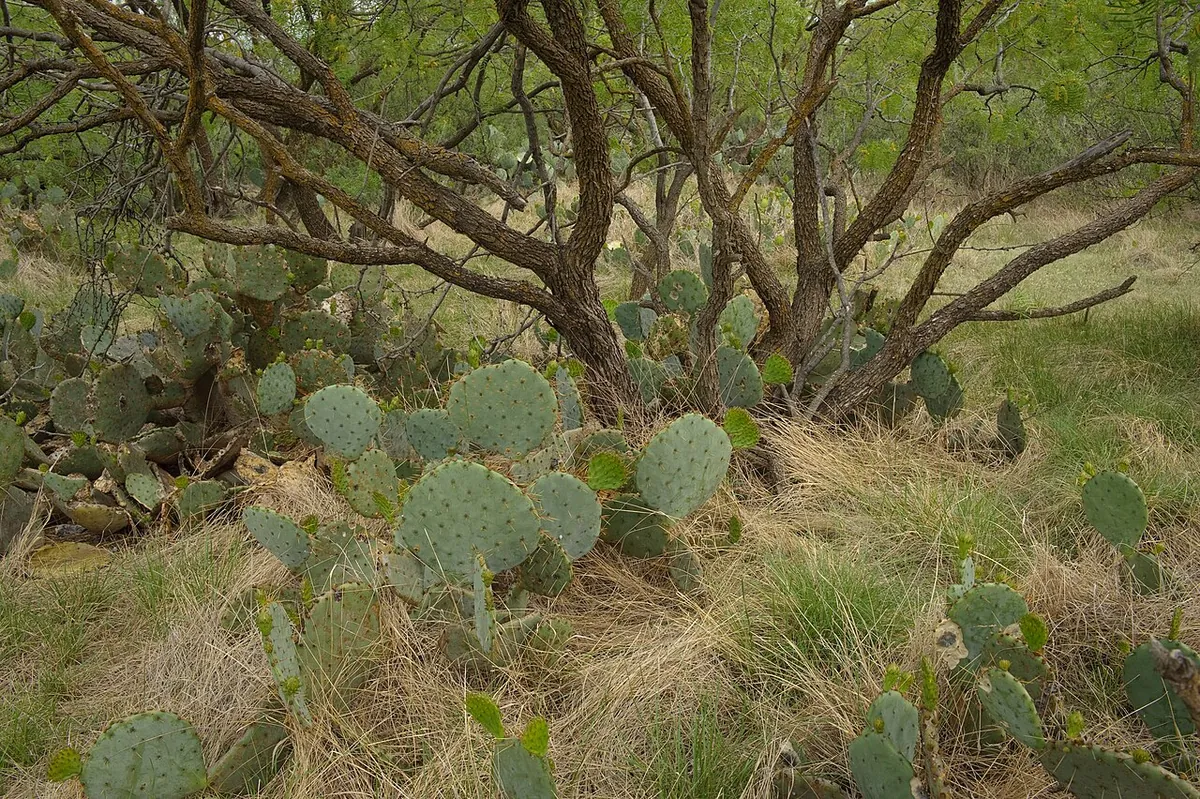
Honey mesquite thicket with prickly pear cactus on rangeland
Mesquite brush, the species that decides how a brush job is done: it sends up new stems from its root crown unless the crown is pulled or the stump treated. Cedar cut below its lowest green branch just dies.

Eastern red cedar is the dominant invasive species across Collin and Denton County ranch land. It's not native to this part of Texas. It spread after the suppression of natural grassland fires that used to keep it in check. Once established, it spreads rapidly through seed dispersal and can colonize a cleared pasture in just a few years if left unmanaged.

Mesquite is a different challenge. It's deep-rooted and drought-tolerant, and it re-sprouts aggressively from buds on its underground stem after cutting. Mechanical clearing gets rid of the above-ground growth; keeping it gone means digging out the root crown or treating the stump, covered on the mesquite removal and grubbing page.

Both species are extremely common on properties across the US-380 corridor and the county roads north of Celina. If you've got raw land in this area that hasn't been actively managed, cedar and mesquite are almost certainly part of what you're dealing with. The right approach differs between a single residential lot and a large multi-acre ranch tract, so ask how the contractor would handle yours.

What Brush Clearing Covers

Eastern Red Cedar
Mesquite
Honeylocust and privet
Mixed native scrub
Thick undergrowth
Invasive species
Overgrown fence lines
Creek and drainage brush

Brush Clearing for Different Property Types
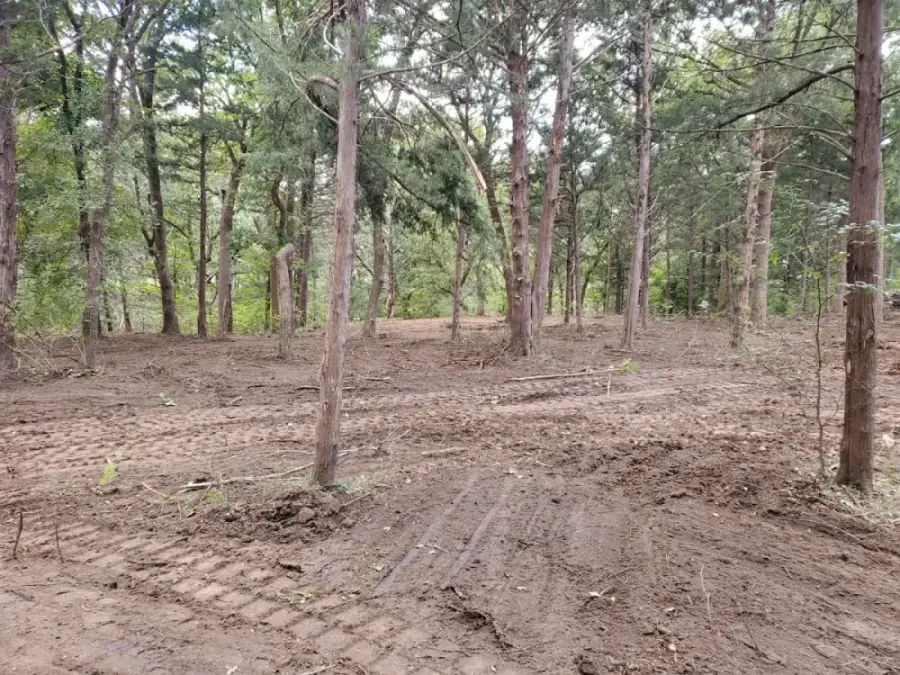
Wooded lot with the underbrush cleared and the trees left standing, track marks in the bare soil, from our featured contractor's own job photos

Recent project from our featured contractor

From our featured contractor's own job photos: a wooded lot with the underbrush cleared out and the trees left standing.

Machine tracks across the bare ground show where the brush came out between the trunks.

Sage C. wrote: “Great people to work with! Very professional, very personable! I highly recommend using their services!”

Ranch and Pasture Land: Improving existing grazing land or clearing overgrown pasture that hasn't been managed in years. The work runs from the fence lines in (see fence line clearing when the fence rows are the main problem) and should leave the property clean. Many ranch owners in Collin and Denton County are finding that decades of cedar encroachment have significantly reduced their usable grazing area, and a thorough clearing job can restore a significant portion of that.

Development Lots: Celina and the surrounding area have a constant pipeline of lots being cleared for custom home construction. The vegetation comes out, the stumps get dealt with, and the lot is brought to a point where site work can begin. Builders have schedules, so share yours at the estimate.

Acreage Properties: Private landowners who want their acreage cleared for recreation, horses, or general property improvement. Many landowners in this area have purchased acreage and discovered that the brush situation is more significant than they expected. Get an honest assessment and a realistic timeline in writing before any work starts.

Ready to clear your brush in Celina TX?

Free on-site evaluation and a straight number.

Call Now
Get a Free Acreage Estimate

No obligation. We'll be in touch soon.

Brush Clearing Celina TX: Frequently Asked Questions
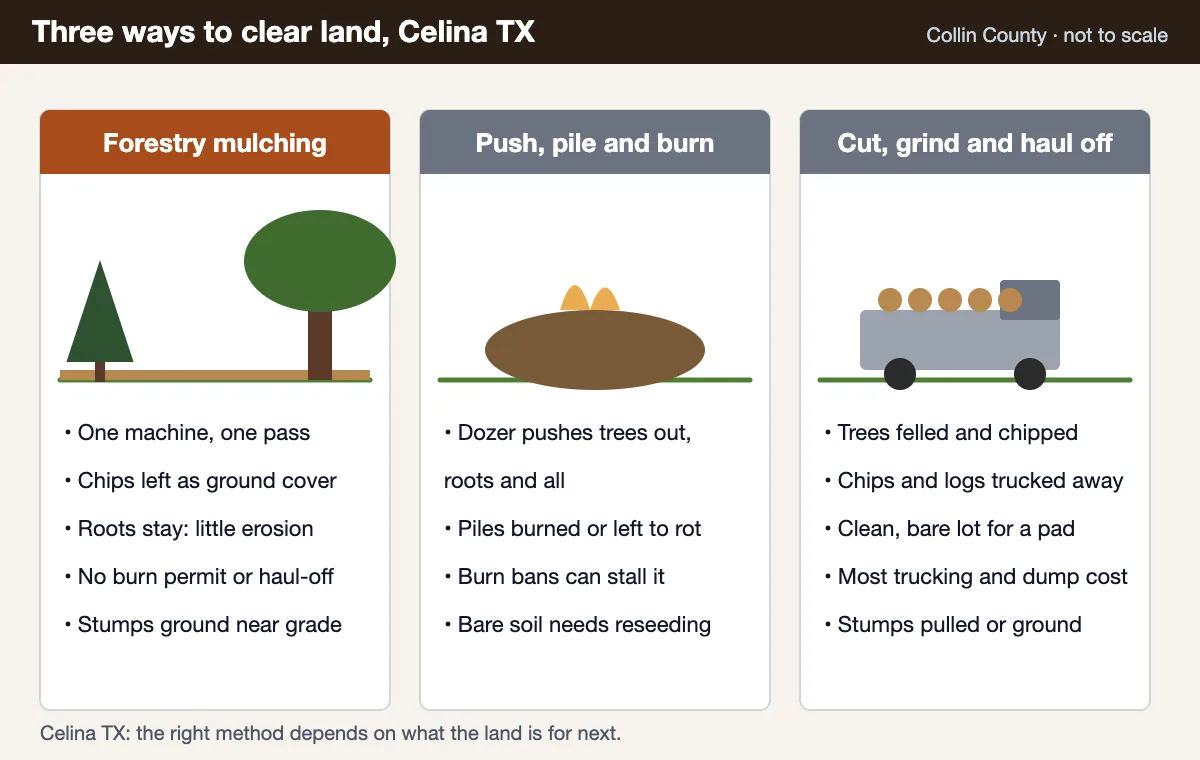
Brush clearing methods compared for Celina TX acreage: forestry mulching, push-pile-burn, grind and haul off
Mulch it, burn it or haul it: the three ways brush leaves a Celina property, and what each leaves behind on the ground.
What brush is most common on Celina TX land?
Eastern red cedar, honey mesquite, honeylocust and privet. The Grayson County AgriLife Extension office, just north of Celina, names those four as the trees that have 'increased dramatically over the last 50 years' in the county. Honeylocust is the one people underestimate: it grows in dense thickets with clumps of long thorns on the trunk and lower branches, which is hard on tires and hands. Privet is an Asian hedge shrub that escaped from yards.
How much does brush clearing cost in Celina TX?
Brush clearing around Celina usually runs $800 to $2,000 per acre for light brush and scattered cedar, $2,000 to $4,500 for medium stands, and $4,000 to $8,000 or more for dense thicket. Where the cut material goes moves the number next: mulched in place costs less than piled and hauled. The free on-site estimate turns the range into one price.
What's the best time of year to clear brush in North Texas?
Late fall through early spring is generally the best window for brush clearing in Collin and Denton County. The ground firms up after summer, cedar and mesquite are less actively growing, and dry conditions make debris management easier. Clearing can happen year-round, but if your schedule is flexible, winter clears tend to leave a cleaner result and cause less soil disturbance.
Do you mulch the brush on-site or haul it off?
Both options are available depending on the job. Forestry mulching grinds the brush directly into the soil surface, which works well for larger acreage where you want to avoid hauling costs and the mulch layer can benefit the soil. For smaller lots or properties where clean appearance matters immediately, debris can be loaded and hauled off-site. Ask which approach fits your timeline and budget.
How do I keep cedar and mesquite from growing back after clearing?
Mesquite will re-sprout from its root crown if it is only cut at the surface, so extracting the crown or treating the fresh-cut stump is what stops it. Eastern red cedar does not re-sprout once it is cut below its lowest green branch; it comes back only from seed. For large tracts where full extraction isn't cost-effective, mechanical clearing followed by a targeted brush control program is the more practical long-term approach. Ask for an honest assessment of what's realistic for your property before you sign.
Can you clear brush close to fencing and established trees I want to keep?
Yes. If you have cedar elms, live oaks, or other trees you want to keep, they should be identified and marked before the job starts so the machines work around them. The same applies to fence lines: a careful operator can clear right up to a fence without damaging it. Walk the property with the contractor before the job and mark anything that needs to stay.
Call Now
Free acreage estimate
Contact