Most private landowners clearing their own rural acreage in unincorporated Collin County do not need a permit. The situations where permits kick in are specific: floodplains, land inside Celina city limits (an earthwork permit from 0.1 acre of disturbed ground, plus a tree removal permit for any tree 6 inches or more across), construction that disturbs an acre or more (TCEQ stormwater rules), and HOA-restricted communities. The rest of this page walks through each case.
When You Do and Don't Need a Permit
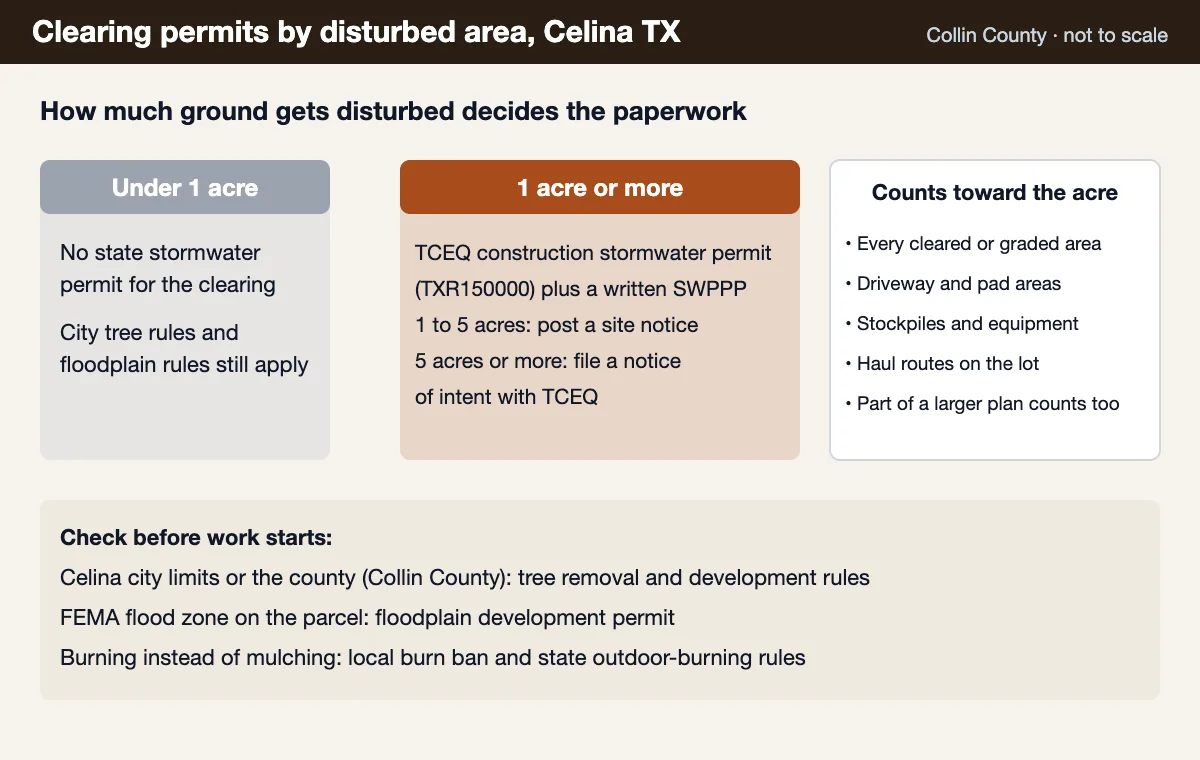
Earthwork permit from the city's engineering department before disturbing 0.1 acre or more (clearing, grubbing, grading, excavation), plus a tree removal permit before taking out any tree 6 inches or more across at 4.5 feet.
Floodplain development permit required for significant earthmoving near Zone A or AE areas.
TCEQ Construction General Permit and SWPPP required if stormwater discharges to surface water.
Review deed restrictions: some require HOA approval before vegetation removal.
Easement terms may prohibit or restrict ground disturbance within the easement boundary.
Generally no permit required. This covers most private landowners in the area.
Do You Need a Permit to Clear Land in Texas?
No, Texas has no statewide permit for clearing land; the permits come from the city, the floodplain map, the size of the disturbed area and the depth of any digging. Four rules decide it for a Celina-area property:
- City limits. Inside Celina, Section 3.12.006 of the city code requires an earthwork permit before anyone disturbs 0.1 acre or more, and it names clearing and grubbing alongside grading, excavation and embankments. That is roughly a 66 by 66 foot patch, so nearly any machine clearing in town needs one. Earthwork in a floodplain also needs a separate floodplain development permit (Celina code, Article 3.12; Celina permits page).
- One acre of construction disturbance. TCEQ's construction stormwater permit starts at one disturbed acre when the clearing is part of building something.
- Mapped floodplain. Grading or fill in a FEMA Zone A or AE needs the floodplain administrator's permit, county or city.
- Digging 16 inches or deeper. Grubbing stumps and root balls with a machine is excavation under the Texas One Call law: the request goes to 811 at least two working days (weekends and holidays excluded) before digging 16 inches or deeper with mechanical equipment (One Call Board of Texas FAQ). The call is free and applies on your own land.
Outside city limits, with no floodplain, no construction project and shallow work like mulching or shredding, a private landowner usually needs nothing. The land clearing cost guide covers what the work itself runs. Burning the cleared brush has its own rules, set out in burning brush in Collin County, and acreage on septic adds the county OSSF permit covered in clearing trees for a septic system.
City of Celina Tree Preservation Rules
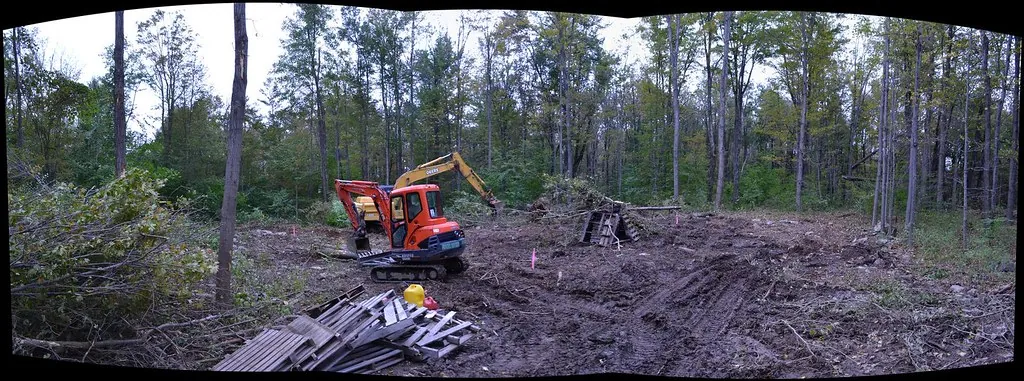
Inside Celina city limits, any tree with a trunk 6 inches or more in diameter, measured 4.5 feet off the ground, is protected, and so is a tree singled out for its species, age, size or rarity. A tree removal permit must be issued before a protected tree comes out or is critically altered (Celina tree preservation code). On a wooded homesite that usually means walking the lot and measuring trunks before any clearing is priced.
Multi-trunk trees count as the largest trunk plus half of every other trunk, so two 4 inch stems from one base add up to 6 inches and need the permit. Each protected tree removed is mitigated with a fee or with replacement trees, at the city's call; the city's Tree Removal Application lists $600 for a 6 to 10 inch tree. Confirm the current fee with Development Services, with your property address, before the work is scheduled.
If you're clearing a private residential lot in Celina's city limits for a home you're already permitted to build, your builder or GC typically handles the tree ordinance review as part of the permit process. If you're clearing before pulling a building permit, the timing can matter. Verify with the city before starting.
FEMA Floodplain: The Rule That Catches People Off Guard
Collin County has significant floodplain acreage along its creek systems. Brush Creek, Rowlett Creek, and their tributaries cross through many rural properties in the area. FEMA maps these as Special Flood Hazard Areas (SFHA), and any substantial development activity within or immediately adjacent to these zones typically requires a floodplain development permit from the local floodplain administrator.
"Development" in the floodplain context includes grading, fill, and earthmoving, not just building structures. Clearing vegetation near a creek bank followed by rough grading can qualify. Check your parcel against FEMA's Flood Insurance Rate Maps (FIRM) before any clearing work starts. You can search by address at the FEMA Flood Map Service Center.
If your property has floodplain on it, that doesn't mean you can't clear the upland portions. It means work near the floodplain boundary needs coordination with the appropriate authority first. Clearing around a floodplain boundary is common on Collin County properties and manageable with the right planning.
What the Contractor Handles vs. What's Your Responsibility
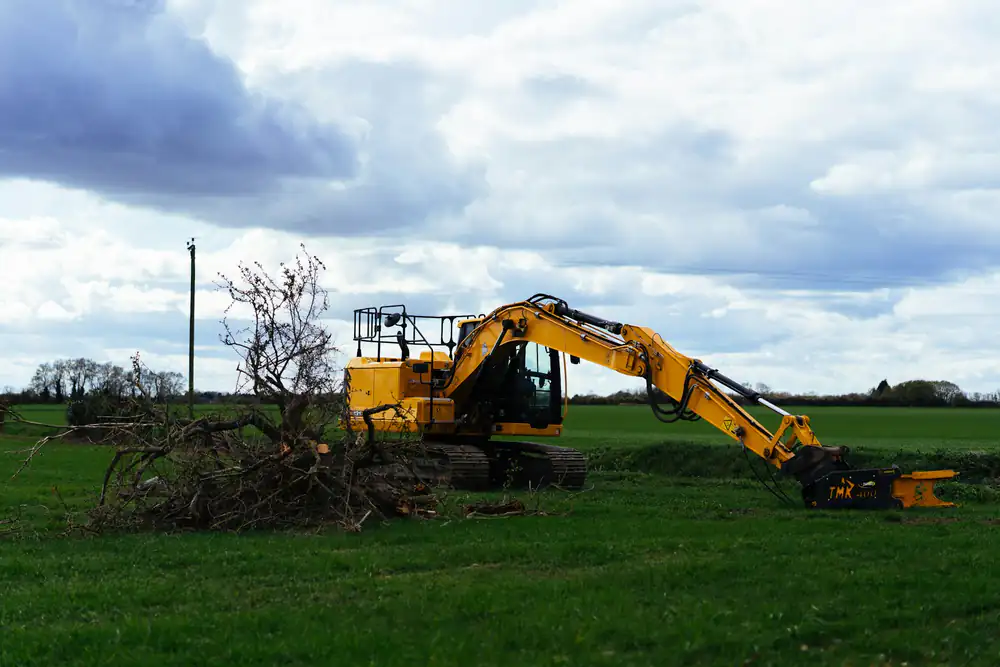
The clearing contractor handles the clearing work. Permit research and applications often fall to the property owner or builder, so settle in writing who files what, and ask the contractor to flag anything at the site visit that might affect the job scope.
If you're not sure whether your clearing project needs a permit, the safest path is a quick call to Collin County's Development Services or Celina's Development Services department with your property address. They'll tell you definitively. It's a 10-minute call that can prevent a work-stop order mid-job.
- Collin County Development Services FAQ: permit requirements for land disturbance and grading
- TCEQ Construction General Permit: stormwater rules for land disturbance of 1 acre or more
- FEMA Flood Map Service Center: search your property's floodplain status by address
Free on-site estimate. Ask for anything that needs a closer look to be flagged before work starts.