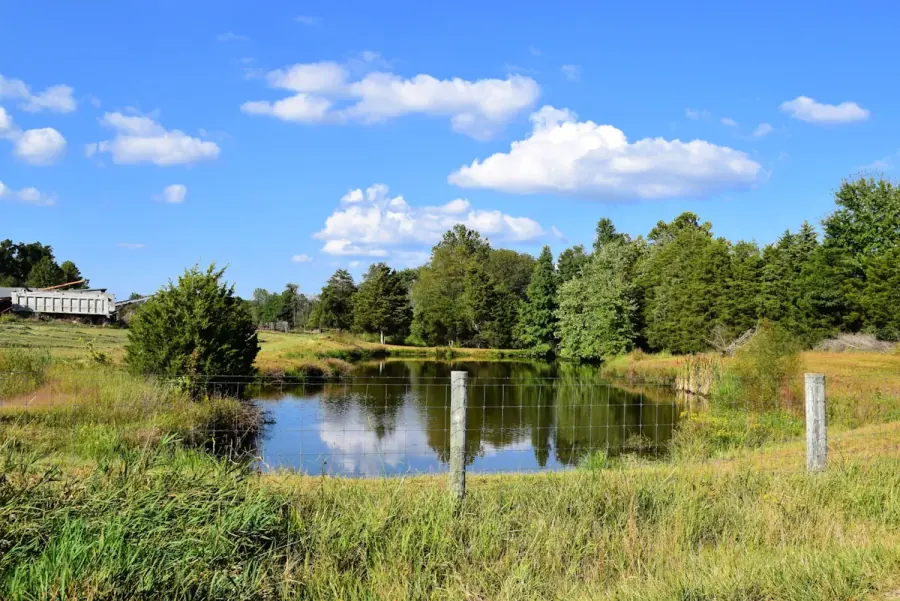
Pond Excavation in Celina, TX
Pond excavation in Celina, TX runs $4,000 to $15,000 for a small backyard pond and $25,000 to $60,000 for a one acre farm pond dug 8 to 10 feet deep. We test the soil before we design, key the dam into clay, and build a spillway that holds. Free on-site estimates.
Farm Pond Construction in Celina, TX and Collin County
Pond excavation is the process of shaping a watertight basin and building an earthen dam that holds runoff, and on a Collin County property it costs $4,000 to $60,000 depending almost entirely on size and whether the soil seals on its own. We build stock ponds, fishing ponds, ornamental water features, and irrigation storage across Celina, Prosper, Aubrey, Weston, and the surrounding rural acreage, and we restore the old silted-in tanks that came with the property.
The thing that separates a pond that holds from a pond that leaks is not the machine. It is the soil test, the core trench, and the spillway, three steps that cost very little during construction and are close to impossible to fix afterward. A pond that will not hold water has to be drained, reshaped, and rebuilt, which is why we dig test pits on the footprint before we quote a design rather than after.
Ponds are also one of the few improvements to rural North Texas land that pay for themselves twice, once as livestock water or recreation and again at resale. That matters here more than most places. Celina was the fastest-growing city in the United States for the year ending July 2025 at 24.6 percent growth, and the acreage tracts around it are being bought by owners who want a working pond rather than an empty pasture. Before the pond goes in, the footprint usually needs land clearing in Celina to strip cedar and brush off the basin and the dam line.
Types of Ponds We Build
Pond type drives design before it drives price, because a stock pond, a fishing pond, and an ornamental pond are three different structures that happen to hold the same water. Depth profile, edge treatment, sealing method, and permitting latitude all change with intended use, so it is the first question we ask.
Stock and livestock ponds
Water for cattle and horses on pasture that has no well or no reliable creek. These are the most common ponds we dig in Collin County, usually a quarter to a half acre with a gentle approach on one bank so animals can drink without breaking down the edge. Texas Water Code gives domestic and livestock ponds the widest permitting latitude of any pond type, which is why most rural landowners start here.
Fishing and recreational ponds
Built for bass, catfish, and bluegill, which changes the design rather than just the size. A fishing pond needs 8 to 12 feet at the deep end so fish survive a North Texas summer, a structured bottom with humps and drop-offs rather than a flat bowl, and a shallow shelf for spawning. We build the structure during excavation because you cannot add it once the pond holds water.
Ornamental and backyard ponds
Smaller water features on acreage home sites and estate lots, typically under a quarter acre. These get a liner more often than farm ponds do, because the owner wants a clean edge, clear water, and no seasonal mud ring. Budget runs $4,000 to $15,000 depending on size, liner choice, and whether a recirculating pump and aeration go in.
Irrigation and fire-protection ponds
Ponds that exist to supply water rather than hold it for its own sake. Irrigation storage changes the permitting picture significantly, because the Texas Water Code exemption covers domestic and livestock use only. Fire-protection ponds on rural acreage can lower an insurance rating when a dry hydrant is installed and the volume meets the carrier's requirement.
Pond restoration and dredging
Most of the ponds on Collin and Denton County ranch land were pushed up decades ago and have been silting in ever since. Restoration means draining, removing accumulated sediment, reshaping the basin, keying the dam back into clay, and repairing the spillway. It usually costs 40 to 60 percent of a new pond and produces a better result than starting over on a fresh footprint.
Dam, levee, and spillway construction
The dam is the part of a pond that fails, so it is the part we spend the most time on. That means a core trench cut down into impermeable clay, backfilled and compacted in lifts rather than end-dumped, plus an emergency spillway sized to pass a large storm without water going over the crest. A pond with a poorly built dam is a liability, not an asset.
Will Your Soil Hold Water? Collin County vs Denton County
Most Collin County soil will hold a pond with no liner at all, and most Denton County soil will not without help, which is the single most useful thing a landowner in this area can know before budgeting. The dividing line runs roughly along the county boundary because it also follows a geological one.
Collin County sits on Blackland Prairie, dominated by the Houston Black soil series. USDA classifies it as a fine, smectitic, thermic Udic Haplustert, which in plain terms means a clay running 40 to 60 percent clay content with smectitic mineralogy. Smectite is the clay mineral responsible for the wide cracks that open across Celina pastures in August and seal shut after the first real rain. That same shrink-swell behavior makes it an outstanding natural pond seal, and it is why ponds on Celina, Anna, Melissa, and Weston acreage typically hold water with no bentonite and no liner.
Denton County is a different proposition. The Aubrey series, named for and with its type location roughly three miles east of Aubrey, Texas, is a Fine, mixed, semiactive, thermic Typic Haplustults. The clay subsoil is there, but it sits beneath a sandy to loamy surface horizon weathered from Eagle Ford and Woodbine materials, and that surface layer will pass water straight through. A pond dug on Aubrey series soil without keying the dam and basin down into the clay subsoil will drain. Some sites need bentonite or a liner on top of that.
| Soil | Where You Find It | Character | Will It Seal? |
|---|---|---|---|
| Houston Black | Celina, Anna, Melissa, Princeton, Weston, most of Collin County | 40 to 60 percent, smectitic | Usually seals naturally. No liner, no bentonite. |
| Aubrey | Aubrey, Pilot Point, western Prosper, much of Denton County | Sandy or loamy surface over clayey subsoil | Variable. Core trench keyed into the clay layer is essential, some sites need bentonite. |
| Creek bottom alluvium | Near Honey Creek, Doe Branch, and Rowlett Creek tributaries | Layered sand, silt, and gravel lenses | Poor. Expect a liner, and expect floodplain permitting to apply. |
Soil series maps are a starting point, not an answer. Series boundaries are drawn at a scale that regularly puts two different soils on one 10 acre tract, and creek bottoms cut through both. That is why we dig test pits across the actual pond footprint during the estimate rather than relying on the survey. Source: USDA NRCS Official Series Descriptions for the Houston Black and Aubrey series.
Pond Permits in Collin County: The Four Thresholds
Four separate rules can apply to a pond in Collin or Denton County, and a normal private farm pond usually clears three of them and only needs the fourth. Knowing which is which keeps a straightforward project from turning into a six month approval exercise.
1. Collin County new-pond permit
Collin County Development Services requires a permit application for new ponds in unincorporated areas, and this is the one that applies to nearly every project. The county reviews the application alongside the property's floodplain status. It is paperwork rather than an obstacle for an ordinary upland pond, but it needs to be in before the dirt work starts.
2. TCEQ dam safety, 30 TAC Chapter 299
TCEQ dam safety rules attach to a dam 25 feet or more in height or impounding 50 acre-feet or more of water. Nearly every private farm pond is well under both numbers. There is a local wrinkle worth knowing: TCEQ's exemption for small dams is unavailable in counties with a population of 350,000 or more, and Collin County at roughly 1.19 million and Denton County at roughly 1 million both exceed that by a wide margin. Landowners here cannot rely on the small-dam exemption, so the pond has to stay under the height and storage thresholds on its design merits. Nearly all do, but it is the reason we size against those numbers deliberately rather than by eye.
3. Texas Water Code Section 11.142 water rights
A landowner may impound up to 200 acre-feet on their own property for domestic and livestock purposes without a water right permit from TCEQ. The exemption is about use as much as volume: irrigation storage, commercial use, and industrial use fall outside it regardless of how small the pond is. For context, 200 acre-feet is roughly a 25 acre pond at 8 feet deep, so volume is rarely the binding constraint on a private pond. Intended use frequently is.
4. Clean Water Act Section 404
Excavating or placing fill in a jurisdictional water of the United States, including wetlands, requires a Section 404 permit from the Fort Worth District of the Corps of Engineers. Section 404(f)(1)(C) exempts construction of farm and stock ponds, but the recapture provision at 404(f)(2) pulls the work back under permitting if it converts a water of the United States to a new use and impairs flow or circulation. The clean way through this is siting: a pond dug in uplands, off-channel, and outside any wetland is generally non-jurisdictional and avoids the question entirely. Damming a flowing creek is the fastest way into it. Ponds inside a FEMA-mapped Zone A or AE floodplain also need a floodplain development permit, and our Collin County permit guide covers the floodplain and stormwater triggers in more detail.
This is a plain-English summary of how these rules generally apply to private ponds, not legal advice on your parcel. Verify current requirements with Collin County Development Services, TCEQ, and the USACE Fort Worth District before construction.
- New farm and stock pond excavation
- Fishing pond design and structure
- Ornamental and backyard ponds
- Pond dredging and restoration
- Dam, core trench, and spillway work
- Bentonite and liner sealing
- Clearing and access for the pond site
- Free on-site estimates
How We Build a Pond in Celina, TX: The 9-Step Process
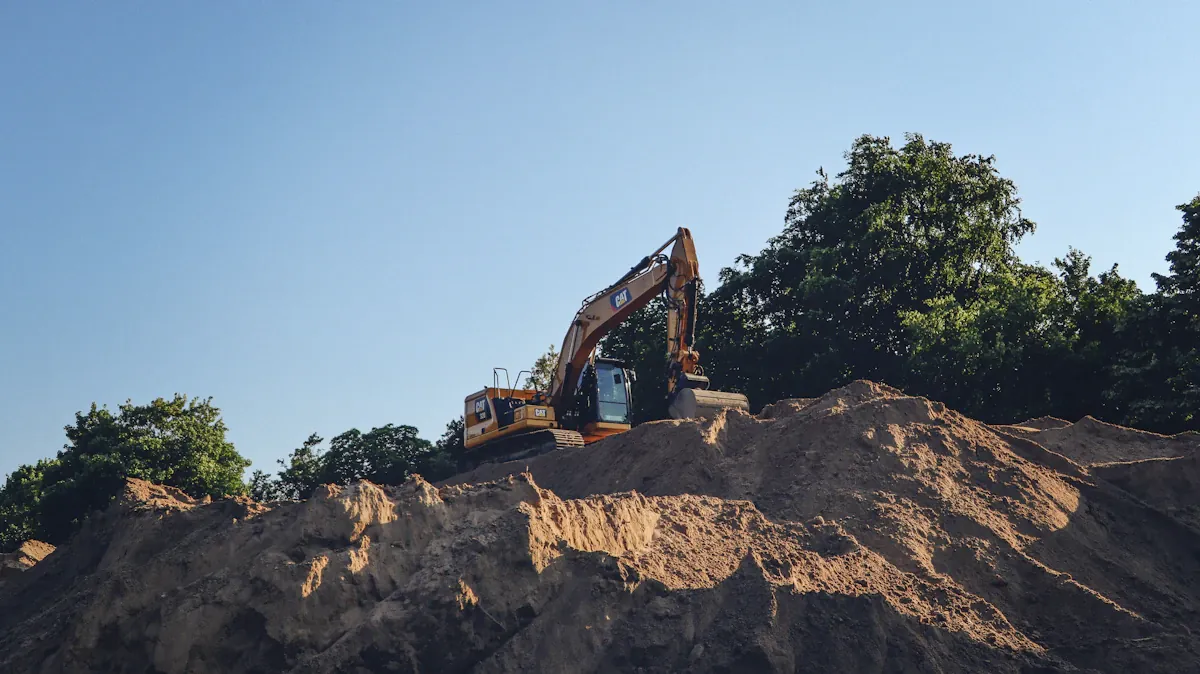
Building a pond follows nine steps in fixed order: pick the site, test the soil, size against the permit thresholds, file the county application and call 811, strip and stockpile topsoil, cut the core trench and raise the dam in lifts, excavate the basin, install the spillway, then seal and stabilize. A quarter acre stock pond runs the full sequence in three to five working days. A one acre pond takes two to three weeks.
- 1
Walk the property and pick the pond site
Site selection decides more about a pond than any later decision. We walk the parcel with you looking for a natural draw or low area with enough upstream watershed to fill the pond and keep it full, ground that does not sit inside a mapped FEMA floodplain, and a location far enough from the septic field, the well head, and the property line. On most Celina and Prosper tracts there are two or three workable spots and one obvious best one, and the difference between them is often thousands of dollars in dirt work.
- 2
Test the soil for clay content
A pond only holds water if the basin seals, so we dig test pits across the footprint before we design anything. Collin County Houston Black clay typically seals on its own with no liner and no bentonite. Denton County Aubrey series soils are a different story, because a sandy or loamy surface horizon sits over the clay subsoil and water will move straight through it. The test pits tell us whether we are building a natural-clay pond, keying into a deeper clay layer, or budgeting for bentonite or a synthetic liner.
- 3
Size the pond and check the permit thresholds
We size the pond against three numbers before any machine moves: the 25 foot dam height and 50 acre-foot storage thresholds that pull a dam into TCEQ dam safety review, the 200 acre-foot ceiling on the Texas Water Code domestic and livestock exemption, and whether the site touches a jurisdictional water of the United States that would require a Section 404 permit from the Fort Worth District of the Corps of Engineers. Almost every private pond in this area sits well under all three, but confirming that is a fifteen minute conversation, not an assumption.
- 4
File the county permit and call 811
Collin County Development Services requires a permit application for new ponds in unincorporated areas, reviewed alongside floodplain status, so that paperwork goes in before the dirt work is scheduled. At the same time we place an 811 utility locate ticket, which Texas law requires at least two working days before excavation. Rural Collin and Denton County parcels routinely carry buried gas transmission lines, rural electric co-op feeds, and private water lines that appear on no plat.
- 5
Strip the topsoil and stockpile it
Topsoil gets stripped off the pond footprint and the dam footprint and stockpiled separately, never mixed into the fill. Topsoil is full of organic matter and root channels, which makes it a poor sealing material and a worse dam material. It comes back at the end to cap the dam and the disturbed edges so grass establishes quickly. Skipping this step is the most common reason a new pond leaks through its own embankment.
- 6
Cut the core trench and build the dam in lifts
The core trench is a cut through the dam centerline down into solid impermeable clay, and it is what stops water from seeping under the embankment instead of through it. We backfill the trench and raise the dam in compacted lifts of eight to twelve inches rather than dumping and pushing, because compaction in thin layers is what makes an embankment watertight. Dam height is built with settlement allowance so the finished crest holds its design elevation after the fill consolidates.
- 7
Excavate and shape the basin
With the dam going up, the basin gets cut to the design contours. A fishing pond gets 8 to 12 feet at the deep end, a defined shelf around the perimeter, and structure left in place on the bottom. A stock pond gets a gentler grade and one shallow livestock approach. The excavated clay is not waste, it is the dam material, which is why a well-planned pond balances cut and fill on site and never pays to import or haul off dirt.
- 8
Install the spillway and overflow
Every pond needs a controlled place for excess water to leave. We cut a vegetated emergency spillway at one abutment, set below the dam crest and wide enough to pass a heavy North Texas thunderstorm, and install a principal spillway pipe with an anti-seep collar where the design calls for one. Water going over the crest of an earthen dam is how earthen dams fail, and the spillway is the only thing preventing it.
- 9
Seal, seed, and stabilize
If the soil tests called for it, bentonite gets blended into the basin surface or a liner gets installed before the pond takes water. Then the stockpiled topsoil goes back over the dam and disturbed ground, the whole area is seeded with a fast-establishing grass, and silt fence goes in at the discharge points. Bare blackland clay erodes hard in the first storm, and on any job disturbing more than one acre this stabilization work is a TCEQ construction stormwater requirement rather than optional cleanup.
The two steps most often skipped are the soil test and the core trench, and they are also the two that decide whether the pond holds water. A crew that quotes a pond over the phone without walking the ground has skipped the first one by definition.
Pond Excavation Cost in Celina, TX
Pond excavation in the Celina area costs $2.50 to $8.00 per cubic yard of material moved, which puts a small ornamental pond at $4,000 to $15,000 and a one acre pond at $25,000 to $60,000. Pond pricing is genuinely volume-driven, which is unusual in dirt work and useful for a landowner, because it means you can sanity check any quote with arithmetic.
Here is the check. One acre is 43,560 square feet. A pond averaging 6 feet of depth across that footprint, meaning 8 to 10 feet at the deep end tapering to shallow edges, moves 43,560 times 6 divided by 27, which is about 9,680 cubic yards. Multiply by $2.50 to $6.00 and you get $24,200 to $58,080. That lands inside the quoted range, which is how you know the range is real rather than a number someone picked.
| Item | Typical Range |
|---|---|
| Excavation, per cubic yard | $2.50 to $8.00 |
| Small backyard or ornamental pond, under 1/4 acre | $4,000 to $15,000 |
| Half acre stock or fishing pond | $12,000 to $30,000 |
| One acre pond, 8 to 10 feet deep | $25,000 to $60,000 |
| Five acre pond | $100,000 to $300,000+ |
| Bentonite sealing, per square foot | $0.30 to $1.00 |
| Synthetic liner installed, per square foot | $1.00 to $2.50 |
| Dam core trench, per linear foot | $8 to $20 |
These are working ranges, not quotes. The four things that move a pond price most are soil sealing quality, haul distance for material that cannot be used on site, access for the equipment, and dam height. The Celina pond digging cost guide works through each of those line by line with the volume math for every common pond size.
When to Dig a Pond in Collin County
Late summer through fall is the best time to dig a pond in Collin County, because the clay is dry enough to compact properly and the pond then fills over the winter and spring wet season. This is the reverse of most dirt work scheduling, where you simply want firm ground. With a pond you want firm ground for the build and rain immediately after it.
Blackland clay is dry and compacts well, so the dam gets built right. The pond then catches the February through May rain and fills over one season.
Usually fine for excavation. Compaction quality depends on how wet the fall was, and a saturated clay subgrade stops work entirely until it dries.
The wettest window in North Texas. Saturated Vertisol will not compact and will not carry equipment. Good for planning and permitting, poor for dirt.
This is the reliable rain window here. A pond finished before it can reach full pool in a single season. One finished in June may sit low until the next spring.
Thinking About a Pond on Your Celina Property?
Free on-site evaluation. We dig test pits, check the watershed, and give you a straight number.
Pond Excavation Celina TX: Frequently Asked Questions
Can I dig a pond on my property in Texas?
Do I need a permit to build a pond in Texas?
What size pond can I build without a permit?
What happens if you dig a pond without a permit?
How much does it cost to excavate a pond?
How much does a 1 acre pond cost to build?
How much would it cost to dig a 20 acre pond?
How long does it take to dig a 5 acre pond?
What is the cheapest way to dig a pond?
Can you just dig a hole for a pond?
How deep should a 1 acre pond be?
How deep should a farm pond be?
Are farm ponds safe to swim in?
What are ponds on farms called?
Will a pond hold water in Collin County clay soil?
How long does a new pond take to fill in North Texas?
Do you have to clear the land before digging a pond?
Full pricing detail with volume math for every pond size is in the Celina pond digging cost guide. County-wide coverage and soil variation across the region is on the Collin County pond construction page. Nearby cities: Prosper and Aubrey. If the pond site still has cedar and brush on it, start with land clearing in Celina.