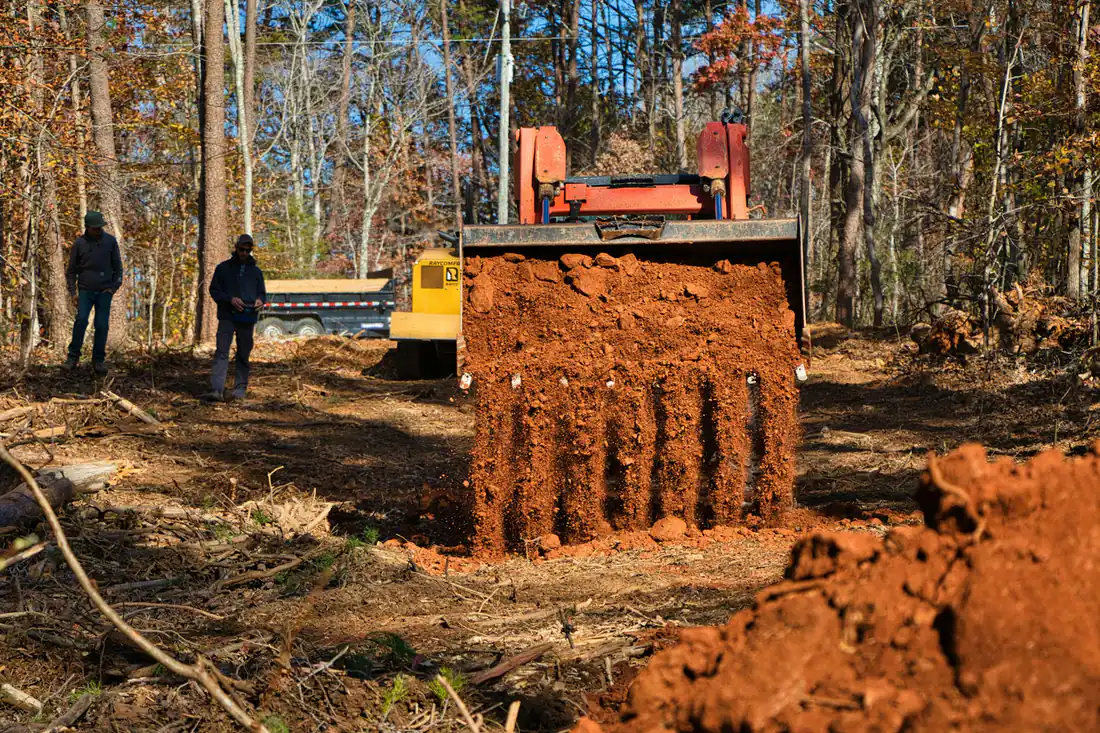
Clearing Trees for a Septic System in Celina, TX
Access for the soil tests, stumps out of the tank and field area, and spray ground left covered the way TCEQ requires.
Clearing Trees for a Septic System on Celina Acreage
Clearing trees for a septic system in Celina means opening the ground an on-site sewage system needs, in the right order: a path for the soil tests, then the tank and field footprint from the design, then cover on anything that will take spray. Celina Land Clearing handles that clearing on rural homesites around Celina, usually in the same visit as the lot clearing for the house and the house pad prep.
Septic comes up on acreage outside city sewer: the one and two acre homesites split off old pasture north and east of town. Outside city limits, Collin County Development Services permits the system; inside a city, TCEQ's list of authorized agents says who does, and where a city is not listed the county is the authority. For land divided in 2008 or later the county requires 1 usable acre, or 1.5 acres with 1 usable acre if there is a water well, so the septic area is a real share of a typical Celina homesite.
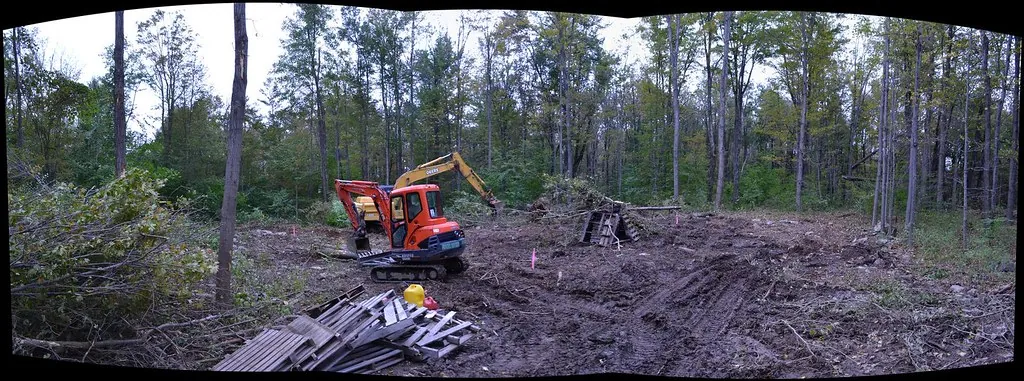
Clear in This Order
The order matters because the design is not known until the soil is tested, and a tree taken out too early cannot be put back.
- 1Open an access path
A lane wide enough for the evaluator's rig or backhoe to reach both ends of the likely field area. Keep it narrow; the design may move things.
- 2Site evaluation and design
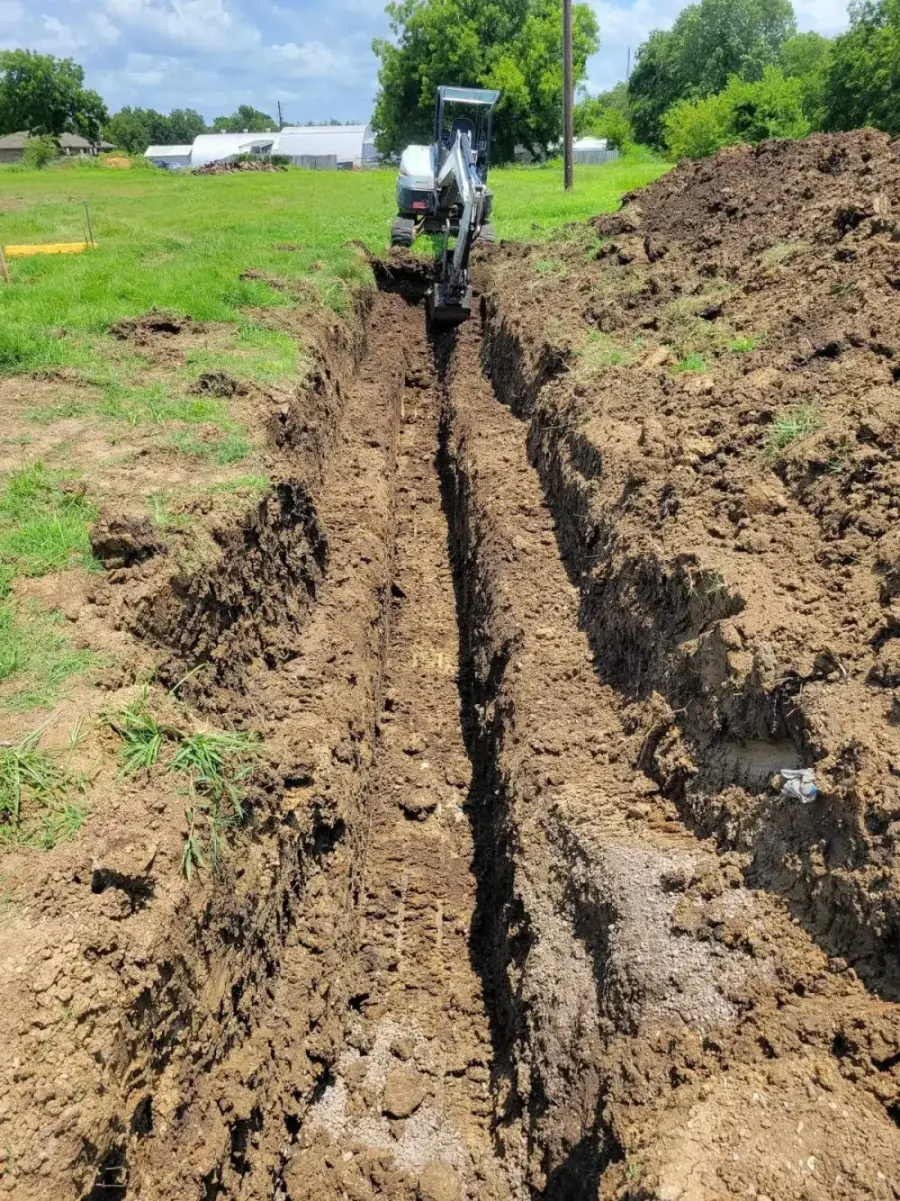
Two soil borings or backhoe pits at opposite ends of the proposed disposal area, dug to two feet below the planned excavation or to a restrictive layer. The site drawing records slopes, the 100-year floodplain and required separation distances.
- 3Clear the footprint on the drawing
Trees and stumps out of the tank, line and trench or drip area; trees outside it stay. Spray areas are cleared selectively so nothing within 10 feet of a sprinkler head blocks the spray.
- 4Seed what was disturbed
Spray ground has to be covered, not bare, before the system is used. Seed or sod the cleared area as part of the job.
TCEQ's rule puts the soil analysis on the site evaluator or professional engineer: two borings or backhoe pits at opposite ends of the proposed disposal area, more where soils vary. That is machine work, so the evaluator needs a way in. A narrow access lane cut before the evaluation costs little and keeps the rest of the trees standing until the drawing shows where the field goes.
Spray Areas Are Not Bare Dirt
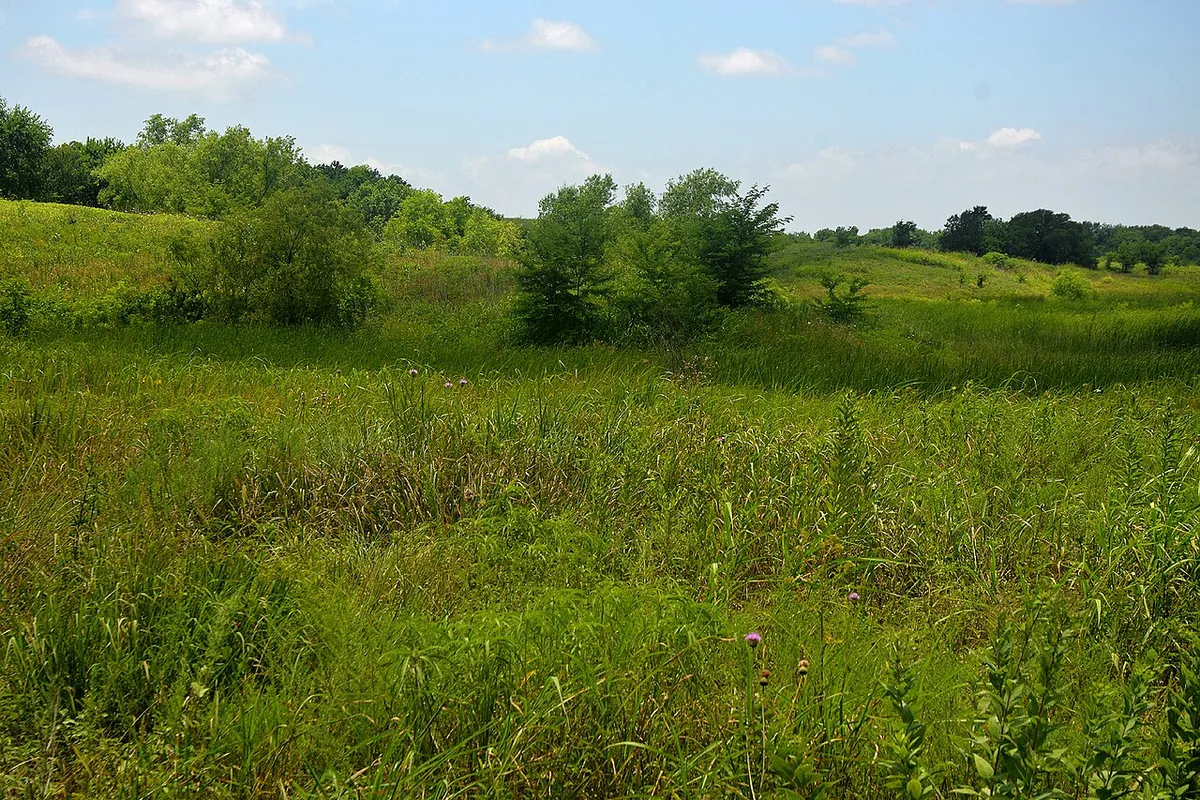
Some systems spray treated effluent onto the surface instead of piping it into trenches; TCEQ calls these surface application systems. TCEQ's rules for those surface application areas are specific: the land should be flat, 15 percent slope or less unless it is landscaped and terraced; it should be covered with grasses, evergreen shrubs, bushes, trees or landscaped beds; and nothing within ten feet of a sprinkler may interfere with even spraying. Unseeded bare ground is not acceptable, and neither is land growing food, gardens or orchards.
That changes how the area is cleared. Brush and low limbs inside each sprinkler's ten foot circle come out; a shade tree outside it can stay. Stumps are ground or pulled so the mower and the sprinkler heads have a clean surface, and the disturbed ground is seeded so it is covered before the system starts. Stripping the whole spray area to bare clay and walking away is the one result the rule rules out.
Stumps, Roots and Digging Rules
Anywhere a tank, a line or a trench will go, stumps come out below grade rather than being ground flush, the same treatment as under a slab or driveway. Pulling stumps with a machine is excavation under the Texas One Call law: a call to 811 at least two working days ahead is required before mechanical digging 16 inches or deeper, and rural Celina tracts often carry private water lines and electric feeds nobody mapped.
Inside Celina city limits, the city's earthwork permit applies to any land disturbance of 0.1 acre or more, including clearing and grubbing, and trees with a trunk 6 inches or more across at 4.5 feet need a tree removal permit first. Outside the city, the county septic permit is the paperwork that matters; the Collin County permit guide covers the rest.
What Septic Clearing Costs
Septic clearing is priced like any other lot clearing, by area and density, plus stumps. A national calculator updated in August 2026 puts a quarter acre at about $1,200 to $2,000 with light growth, $2,000 to $3,500 moderate and $3,500 to $5,000 heavy, with stumps about $100 to $400 each. Doing the septic area in the same mobilization as the house pad and the drive saves a second move-in. Celina per-acre ranges are in the land clearing cost guide, and what to do with the cut brush is covered in burning brush in Collin County.
Send the address and the designer's drawing if you have it.
Call NowClearing Trees for a Septic System: Frequently Asked Questions
Do trees have to be cleared for a septic system?
Should I clear the septic area before or after the site evaluation?
Who issues septic permits around Celina?
Can a septic spray field be bare dirt?
How big a lot do I need for a septic system in Collin County?
- Collin County: On-Site Sewage Facilities (permits, lot size)
- TCEQ: On-Site Sewage Facility Rules Compilation, RG-472, 30 TAC Chapter 285 (rev. May 2017)
- TCEQ: On-Site Sewage Facilities program
- One Call Board of Texas: FAQs (811)
- City of Celina Code, Article 3.12 (earthwork permit)
- Land clearing cost by lot size, national calculator (Aug 2026)
Last reviewed October 2026. The septic design itself comes from a site evaluator or engineer; confirm current county requirements before work starts.