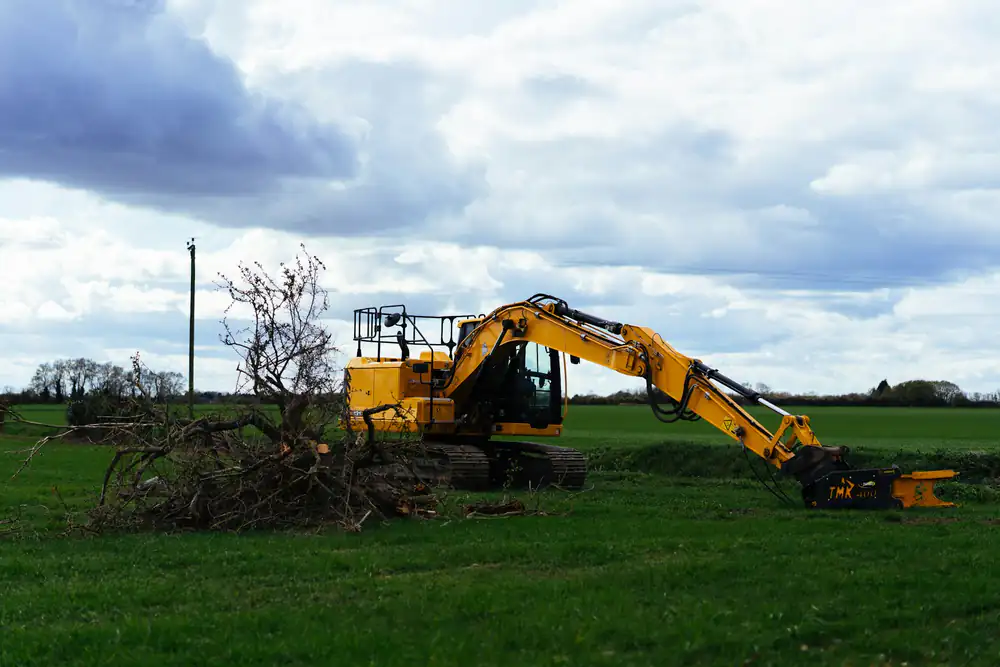
Burning brush after land clearing in Collin County is allowed only when there is no practical alternative, and not at all while a burn ban is in force. The county ordered a 90 day ban on all outdoor burning in unincorporated areas starting August 11, 2026. Outside a ban, Collin and Denton County sit in the Dallas-Fort Worth ozone nonattainment area, where TCEQ limits burning of land-clearing waste to jobs with no practical alternative. On most Celina-area lots, mulching or haul-off is that alternative.
The question comes up on nearly every rural job: a homesite or pasture gets cleared, the cedar and mesquite end up in long piles, and burning them looks free. Celina Land Clearing gets asked this before most land clearing in Celina quotes, so here is how the rules line up for Collin County and the towns around it, with the official sources at the bottom of the page.
Burning Brush in Collin County: The Burn Ban
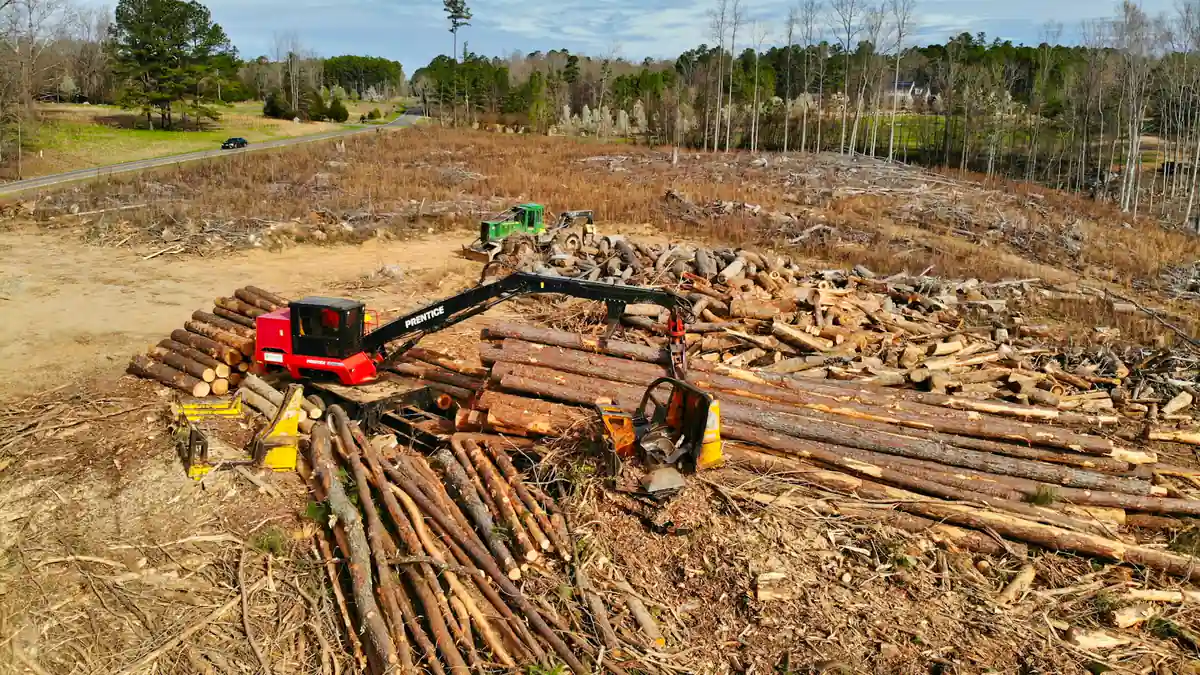
On August 11, 2026 the Collin County Commissioners Court ordered that all outdoor burning is prohibited in the unincorporated areas of the county for 90 days, unless the restrictions end earlier on a determination by the Texas Forest Service or the County Fire Marshal. The order was adopted under Local Government Code 352.081, and a violation is a Class C misdemeanor with a fine of up to $500.
The order keeps three narrow exceptions that TCEQ authorizes for public health and safety: firefighter training, public utility, natural gas pipeline or mining operations, and burns run by a prescribed burn manager certified under the Natural Resources Code. Clearing a homesite or a pasture is not one of them. A burn ban covers the unincorporated county; cities set their own rules inside their limits.
The county does not issue burn permits. Its fire marshal's office puts it plainly: TCEQ does not issue burning permits, no county office can give permission to burn, and only TCEQ can decide whether a request meets an outdoor burning exception.
The TCEQ Rule for Land Clearing in DFW Counties
Even with no ban in force, Collin is not an ordinary Texas county for burning. TCEQ lists Collin, Dallas, Denton, Ellis, Johnson, Kaufman, Parker, Tarrant and Wise as the Dallas-Fort Worth ozone nonattainment area, classed as serious. In nonattainment counties, TCEQ's outdoor burning guide allows burning of waste plant growth only if it came from right-of-way maintenance, land clearing or canal maintenance, and only if no practical alternative to burning exists. In most attainment counties, by contrast, landowners can burn plant growth without weighing alternatives first.
A practical alternative, in TCEQ's words, is one that is economically, technologically, ecologically and logistically viable, judged by what a reasonable person would do. A mulcher that can reach the site at a normal price is hard to argue away. Two more limits catch people out: land-clearing material may only be burned at the site where it was cleared, never hauled to another property to burn, and the guide's definition of land clearing covers clearing for buildings, development, access or production, not routine cleanup of fallen limbs.
If a burn is allowed: the general requirements
- Start at least one hour after sunrise and finish the same day at least one hour before sunset, with a responsible person present while the fire is active.
- Only burn with surface wind of at least 6 mph and no more than 23 mph, and never during a temperature inversion.
- Keep the fire downwind of, or at least 300 feet from, any neighboring structure where people or livestock are, unless the occupant gives written permission.
- Post someone to flag traffic if smoke may blow across a road.
- Burn plant material only: no treated lumber, plastics, rubber, insulation, heavy oils, asphalt or demolition debris.
Where Your Land Is Decides the Rule
The Celina area straddles three counties and several city limits, so the answer changes within a few miles. This table pulls the county order, TCEQ's guide and its nonattainment list into one place.
| Where the land is | What decides it | Who to ask |
|---|---|---|
| Unincorporated Collin County (rural Celina, Weston, Anna and Melissa acreage) | County burn ban order: no outdoor burning for 90 days from August 11, 2026 unless lifted early. When no ban is in force, TCEQ's nonattainment rule still applies: land-clearing waste only when no practical alternative exists. | Collin County Fire Marshal (ban status); TCEQ Region 4 in Fort Worth (the rule) |
| Inside Celina, Prosper, Anna or Melissa city limits | In nonattainment counties, burning to clear land inside a city is not exempt unless the city has an ordinance allowing it. Without one, TCEQ can grant written permission case by case, and you cannot start until you have it. Celina publishes its own open burning requirements. | The city fire department first, then TCEQ Region 4 |
| Denton County side (Aubrey, Pilot Point, west Celina and Prosper) | Denton County is also in the DFW nonattainment area, so the same no-practical-alternative rule applies. Denton County sets its own burn bans. | Denton County Fire Marshal; TCEQ Region 4 |
| Grayson County (Gunter, Van Alstyne) | Grayson is not on TCEQ's DFW nonattainment list. TCEQ does treat an attainment county as nonattainment when a city in it extends into a bordering nonattainment county, so confirm before assuming the looser rule. | TCEQ Region 4; Grayson County for ban status |
Clearing that disturbs ground also has its own permits, separate from burning: the Collin County land clearing permit guide covers Celina's earthwork and tree permits and the one acre stormwater rule.
What to Do With the Brush Instead
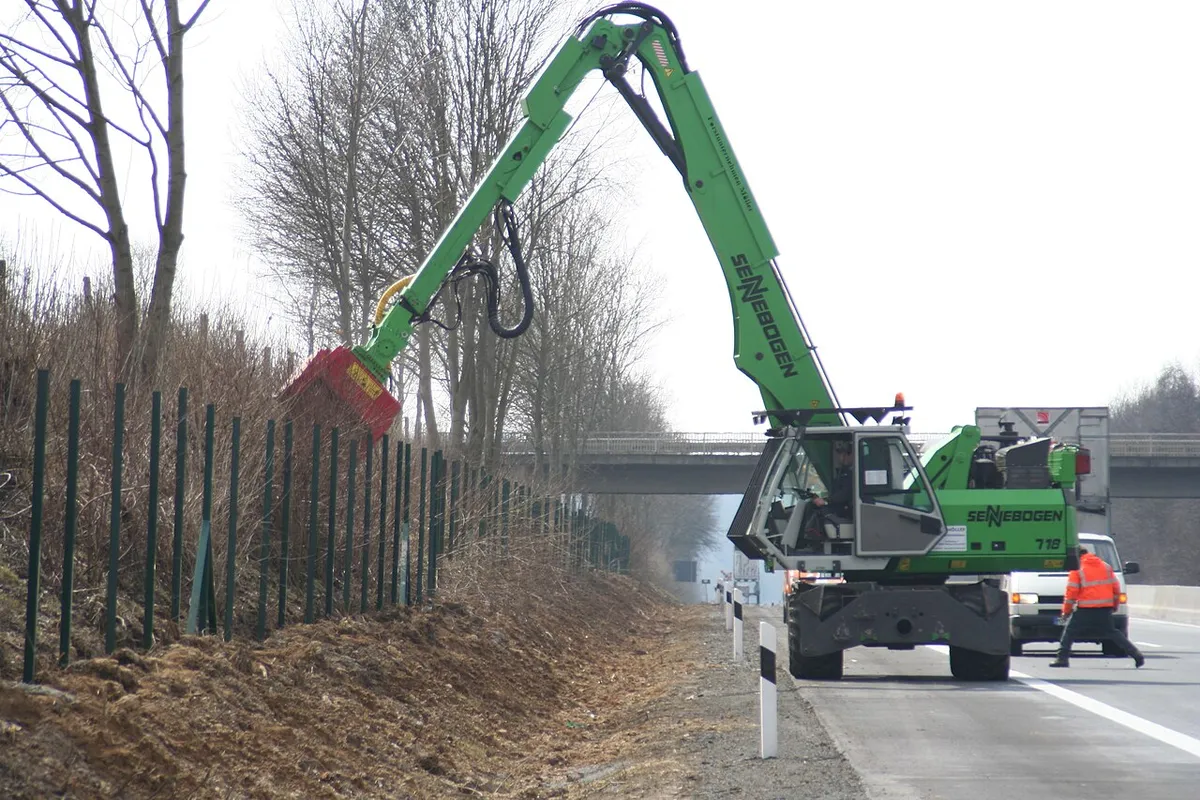
On most Celina-area acreage the answer is to never make a pile. Forestry mulching in Celina grinds cedar and brush where they stand and leaves the chips as cover on the clay, which is why it is usually the cheapest legal option. Where the ground has to end up bare for a slab or a driveway, the trees are cut, the stumps pulled and the debris hauled, which is how most lot clearing for a new home is done.
| Method | What happens to the brush | Cost note |
|---|---|---|
| Forestry mulching | Cedar and brush ground in place, chips left as ground cover. No pile, no trucks, nothing to burn. | About $500 to $2,500 an acre on a San Antonio land services price list |
| Cut and haul off | Trees and brush loaded and trucked to a landfill or mulch yard. Leaves bare ground for a slab or drive. | Mulching often runs 20 to 40 percent less than cut and haul |
| Chipping | Limbs fed through a chipper; chips spread on site or hauled. Suits small amounts and tree trimming. | Priced by the job |
| Air-curtain incinerator (trench burner) | A portable fan-driven pit burner that disposes of brush with minimal smoke. Needs TCEQ Air Permits Division authorization before it is set up. | Developer and subdivision scale |
Subdivision developers sometimes do burn inside city limits, which confuses neighbors. TCEQ's guide explains that those jobs use air-curtain incineration in a pit, run by companies that need prior TCEQ approval and a federal operating permit. It is not an option for a single homesite. For what each method adds to a quote, see the land clearing cost guide.
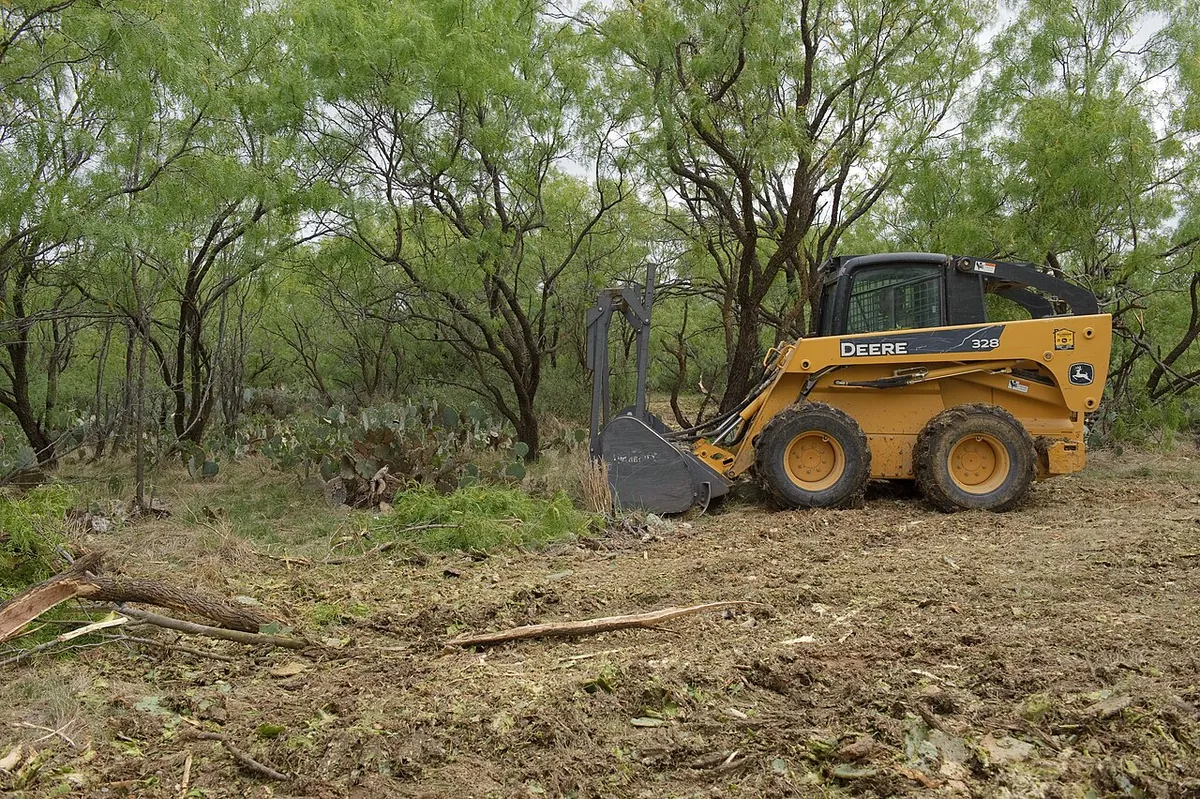
Free on-site estimate, with mulching and haul-off priced side by side.
Burning Brush in Collin County TX: Common Questions
Is there a burn ban in Collin County right now?
Can I burn brush from land clearing in Collin County?
Do I need a burn permit in Collin County?
What is the fine for burning during a Collin County burn ban?
Can I haul cleared brush to another property and burn it there?
- Collin County Commissioners Court: Order Prohibiting Outdoor Burning, August 11, 2026 (PDF)
- Collin County Fire Marshal: Outdoor Burning
- TCEQ: Outdoor Burning in Texas, RG-049 (Rev. 10/25)
- TCEQ: Dallas-Fort Worth ozone nonattainment area
- City of Celina: Open Burning Requirements
- A San Antonio land services company: cost to clear land in Texas (Feb 2025)
- A Central Texas land clearing company: cost per acre in Texas (July 2026)
Last reviewed October 2026. Burn bans change with the weather; check the county page before any burn.